Ask a German-learning forum what to use and the same dozen names come back every time. Here they are, sorted by what they are good for, with the honest limit of each.
Most askedDr. Nitin KumarOctober 20267 min read
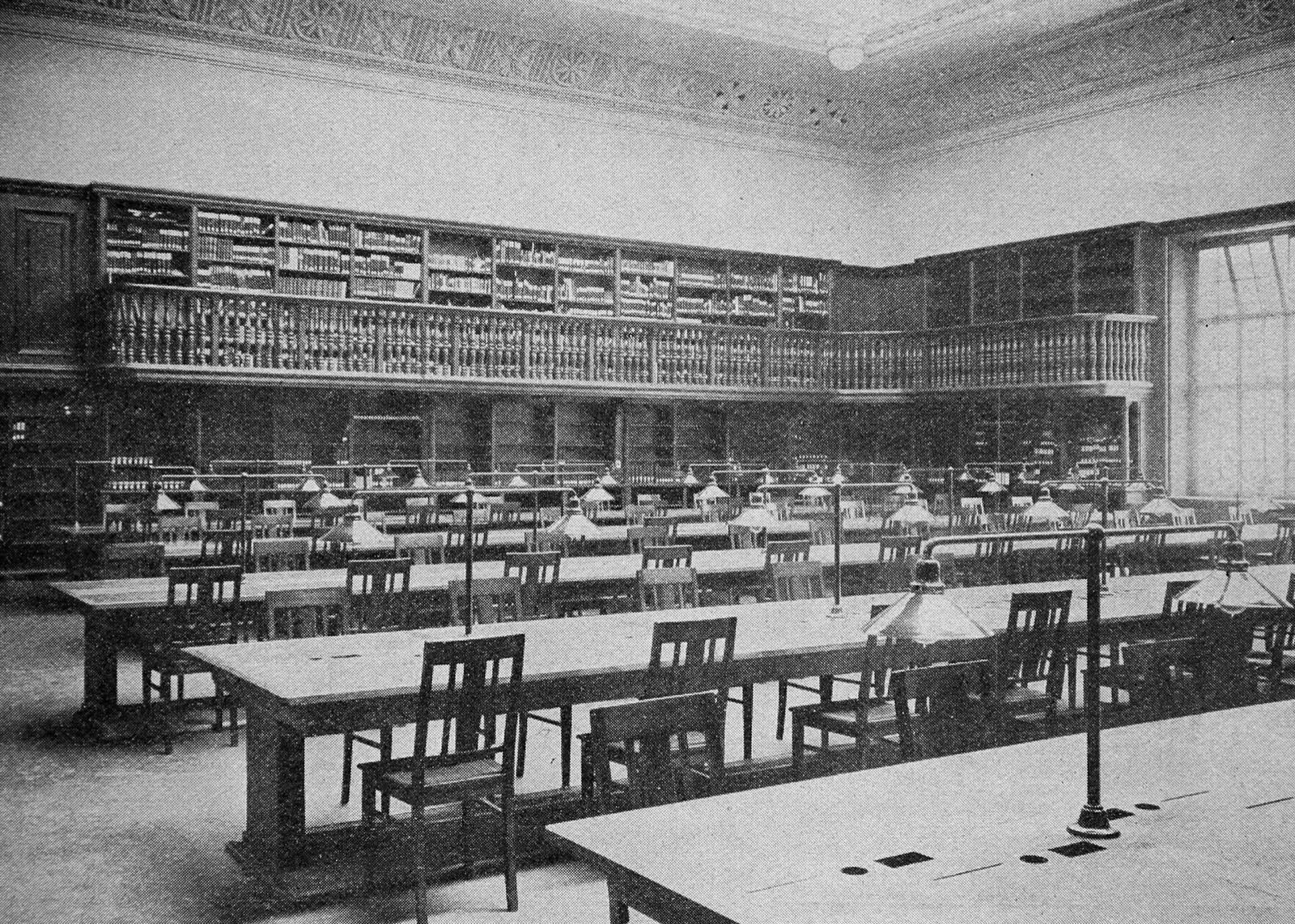
The vaulted reading room of the Zentralbibliothek Zürich music department. Photo: Zentralbibliothek Zürich / Severin Pomsel, CC BY-SA 4.0.
This is not a ranking. Each of these does one job well, and the forum threads rarely say which job. Here they are sorted by what they are for, with the honest limit of each.
14resources on this list
5jobs they cover
0that tell you which one you need today
The list, by job
Resource
Good for
Level
Nicos Weg
A first course
A1 to B1
Easy German
Real speech
From A1
Grammatik aktiv
Drilling one rule
A1 to C1
Hammer’s Grammar
The complete rule
Any
DWDS, dict.cc
Words in real sentences
Any
Nachrichtenleicht
Simple news
From A2
Langsam gesprochene Nachrichten
Slow news
B1 to B2
Tagesschau, podcasts
Native speed
From B2
Anki
Memory
Any
Tandem, HelloTalk
Speaking
Any
Starting from zero
Nicos Weg (Deutsche Welle). Free video course, a story with exercises attached. The most recommended start, for good reason.
Limit. It ends at B1, and the exercises are recognition.
Easy German (YouTube and podcast). Street interviews, German and English subtitles, real speed.
Limit. Listening practice, not a path: you will not know what you are missing.
Nicos Weg
Easy German
Cost
Free
Videos free, extras paid
Order
A1 to B1, step by step
Topic by topic
Speech
Clear, actors
Real people, real speed
Your output
Mostly tap and drag
None
What learners complain about:
“The exercises are drag and drop.” You can finish a chapter and still not build the sentence yourself.
“Easy German is not easy.” At A1 the street interviews go far too fast.
“The transcripts are behind the membership.” The podcast’s full transcripts come with the paid tier.
“I watch every week and don’t know what I’ve learned.” Nothing tracks what stuck.
Grammar you can look up
Grammatik aktiv (Cornelsen). One rule, one page, many exercises. The standard answer to “how do I drill the cases”.
Hammer’s German Grammar and Usage. The reference in English, for the moment you need the complete rule.
DWDS. Real corpus sentences next to each word, so you learn what a word goes with.
dict.cc. Fast, and its forum answers the odd cases.
Hammer’s is not a read. Look the rule up; do not go cover to cover.
Resource
Advantage
Disadvantage
Grammatik aktiv
Many exercises, answer key
Gap fills, one rule at a time
Hammer’s
Complete and exact
Dense, full of terms
DWDS
Real sentences, free
All in German, academic
dict.cc
Fast, huge, free
Many options, little context
What learners complain about:
“I get every gap right in the book and still get it wrong when I speak.” The page tells you which rule is being tested.
“I need three grammar terms to read one rule.” Hammer’s assumes you know the words for the grammar.
“DWDS is overwhelming.” The examples are newspaper German, hard below B2.
“dict.cc gives me eight words and no idea which one a German would say.”
Listening, one step up
Nachrichtenleicht (Deutschlandfunk). The week in simple German, good from A2.
Langsam gesprochene Nachrichten (Deutsche Welle). The day’s news, read slowly, with a transcript: the classic B1 to B2 bridge.
Tagesschau and podcasts From B2, on a subject you already care about.
Pick the subject firstIf it is boring in English, it will not become interesting in German.
Resource
Advantage
Disadvantage
Nachrichtenleicht
Short, simple, weekly
Very simplified
Langsam gesprochene Nachrichten
Transcript, every day
Slower than any real speaker
Tagesschau, podcasts
Real German, endless
Fast and dense
What learners complain about:
“It reads like it was written for children.” Said of simple-German news.
“I understand the slow news, then a real conversation is a wall.”
“I leave the podcast on and it turns into background noise.” Listening without following teaches little.
Remembering
Anki is spaced repetition, free, and the thing everyone eventually recommends. It tests recognition of whatever you put in.
What most people put in
Isolated words
No gender
No case
What to put in
The sentence you met it in
Its gender
The case it came with
Advantages
Free on desktop and Android
Shows a card just before you forget it
Any card you can make
Disadvantages
The iPhone app is paid
You build and fix the deck yourself
Tests recall of the card, not use
What learners complain about:
“I skipped four days and came back to hundreds of reviews.”
“The settings make no sense.” The app looks old and the defaults are not explained.
“Shared decks are full of mistakes.” Often no gender, sometimes wrong translations.
“I know the card, but the word doesn’t come when I speak.”
Speaking
Tandem or HelloTalk. A language partner.
A local Stammtisch. A table to sit at.
Goethe-Institut Modellsätze. Free, if an exam is the goal.
Resource
Advantage
Disadvantage
Tandem, HelloTalk
Native speakers, any time
Partners come and go
Stammtisch
Real talk, face to face
Mixed levels, not in every town
Modellsätze
The real exam format
No one marks your writing or speaking
What learners complain about:
“Half the messages are people looking for a date.” A common complaint about the partner apps.
“Everyone wants to practise English.” The German half of the exchange never comes.
“My partner is nice, but never corrects me.”
“As soon as I hesitate, they switch to English.”
The gap
Every resource on this list is good at one thing. None of them tells you which one you need today.
A learner at B1 does not need more material. They need to know which of these is today’s problem:
A case. The dative after mit.
Word order. The verb at the end of the clause.
Listening. A speed you have not reached yet.
The resources above are the material. The diagnosis still falls to you.
Which of these is your issue?
The same complaints come back across every list above. Tick the ones that are yours.
“I know the rule and still get it wrong.” MeisterPath tests each rule in use, not only on its own page, and explains every mistake right away, with an example.
“I recognise words but can’t use them.” Every word is tracked at three depths: recognise, remember, transfer. In Anwenden you write the sentence; you don’t pick a tile.
“My app says I’m B1, the exam said A2.” Unit tests are shaped like telc and Goethe, and the result comes per skill and per depth.
“I have five tools and no plan.” The home screen names what holds you back and gives one next step.
“Nobody corrects my writing.” Free writing comes back with a correction on every line.
“I freeze when I have to speak.” MeisterPath does not replace a partner. It gets you to the table with sentences you can build.
In MeisterPathStories and dialogues at your level, every rule with its reason and an example read in a natural German voice, and a home screen that names what holds you back and the one next step. Use the resources above alongside it; they are good.
Dr. Nitin KumarFounder of MeisterPath. Learned German in Zürich, now learning Mandarin the same way.

 MeisterPath Labs
 Most asked
 Learning strategy